A lithium-ion battery or Li-ion battery is {a type|a kind|a sort} of rechargeable battery composed of cells {in which|by which|during which} lithium ions {move|transfer} from the {negative|adverse|unfavorable} electrode {through|via|by way of} an electrolyte to the {positive|constructive|optimistic} electrode {during|throughout} discharge and {back|again} when charging. Li-ion cells use an intercalated lithium compound as {the material|the fabric} {at the|on the} {positive|constructive|optimistic} electrode and {typically|sometimes|usually} graphite {at the|on the} {negative|adverse|unfavorable} electrode. Li-ion batteries have a {high|excessive} {energy|power|vitality} density, no {memory|reminiscence} {effect|impact} and low self-discharge. Cells {can be|could be|may be} manufactured to prioritize {either|both} {energy|power|vitality} or {power|energy} density. They can {however|nevertheless|nonetheless} be {a safety|a security} hazard since they {contain|include|comprise} flammable electrolytes and if {damaged|broken} or incorrectly charged can {lead to|result in} explosions and fires.

Charging temperature limits for Li-ion are stricter than the {operating|working} limits. Lithium-ion chemistry performs {well|properly|nicely} at elevated temperatures {but|however} {prolonged|extended} {exposure|publicity} to {heat|warmth} reduces battery life. Li‑ion batteries {offer|supply|provide} good charging {performance|efficiency} at cooler temperatures {and may|and should|and will} even {allow|permit|enable} 'fast-charging' {within|inside} a temperature {range|vary} of 5 to {45|forty five} °C (41 to 113 °F). At temperatures from {0|zero} {to 5|to five} °C charging {is possible|is feasible}, {but the|however the} charge {current|present} {should be|ought to be|must be} {reduced|lowered|decreased}. During a low-temperature charge, the slight temperature rise above ambient {due to the|because of the|as a {result|end result|outcome} of} {internal|inner|inside} cell resistance {is beneficial|is useful|is helpful}.

Consumer-grade lithium-ion batteries {should not be|shouldn't be} charged at temperatures {below|under|beneath} {0|zero} °C (32 °F). Although a battery pack {may|might|could} {appear to be|look like|seem like} charging {normally|usually}, electroplating of metallic lithium can {occur|happen} {at the|on the} {negative|adverse|unfavorable} electrode {during|throughout} a subfreezing charge, and {may not be|is {probably|in all probability|most likely} not|will not be} {removable|detachable} even by repeated {cycling|biking}. Most {devices|units|gadgets} {equipped|outfitted|geared up} with Li-ion batteries {do not|don't} {allow|permit|enable} charging {outside|outdoors|exterior} of 0–45 °C for {safety|security} {reasons|causes}, {except for|apart from|aside from} {mobile phones|cell phones|cellphones} {that may|which will|that will} {allow|permit|enable} {some degree|a point|some extent} of charging {when they|once they|after they} detect an emergency {call|name} in progress. Find a {selection of|choice of|number of} {car|automotive|automobile} battery chargers and {jump|leap|bounce} leads from {professional|skilled} {car|automotive|automobile} chargers to {car|automotive|automobile} {power|energy} inverters {ideal|best|perfect} for {vehicle|car|automobile} {owners|house owners|homeowners} and mechanics. We {stock|inventory} well-known {brands|manufacturers} {including|together with} Einhell, Streetwize, Ring, Vivanco and SIP Industrial. View {a range|a variety|a spread} of {car|automotive|automobile} battery chargers {to ensure|to make sure} you’re {never|by no means} left {without|with out} {power|energy} with a {varied|various|diversified} {suitable|appropriate} adjustment {for 6|for six} to 12V {vehicles|automobiles|autos}.

We {stock|inventory} the Einhell Microprocessor {controlled|managed} {car|automotive|automobile} battery charger with a multi-step charging cycle and winter mode for temperatures {below|under|beneath} 5°C. Purchase {either|both} of {the two|the 2} {versions|variations}, one {suitable|appropriate} for 3-60Ah batteries or {another|one other} with a {jump|leap|bounce} {start|begin} {function|perform|operate} {suitable|appropriate} for 30399Ah batteries. Other {car|automotive|automobile} battery chargers {include|embrace|embody} the IP56 {safety|security} weatherproof Ring Smart battery charger and SIP Chargestar Smart 18 or T27 {car|automotive|automobile} battery chargers with {built in|inbuilt|in-built} charge. Choose the Ring Powerpack for a multi-function {device|system|gadget} that {jump|leap|bounce} {starts|begins}, inflates tyres and {supplies|provides} {power|energy} {to start|to {start|begin} out|to begin} 12V {vehicles|automobiles|autos} with 200W, small {tools|instruments} and {appliances|home equipment}. We {stock|inventory} separate {jump|leap|bounce} leads, {power|energy} inverters and booster cables {suitable|appropriate} {for most|for many} {vehicles|automobiles|autos} {that can|that may} convert 12V DC batteries to 230V AC and in {car|automotive|automobile} chargers for all {mobile|cellular|cell} {devices|units|gadgets}.
Click and {collect|gather|acquire} {from your|out of your} closest {branch|department} or spend over £25 {for free|free of charge|at no cost} {delivery|supply}. A liquid electrolyte acts as a conductive pathway for the {movement|motion} of cations passing from the {negative|adverse|unfavorable} to the {positive|constructive|optimistic} electrodes {during|throughout} discharge. Typical conductivities of liquid electrolyte at room temperature (20 °C (68 °F)) are {in the|within the} {range|vary} of 10mS/cm, {increasing|growing|rising} by {approximately|roughly} 30–40% at {40|forty} °C (104 °F) and {decreasing|reducing|lowering} {slightly|barely} at {0|zero} °C (32 °F). The {combination|mixture} of linear and cyclic carbonates (e.g., ethylene carbonate and dimethyl carbonate ) {offers|provides|presents} {high|excessive} conductivity and {solid|strong|stable} electrolyte interphase -forming {ability|capability|capacity}.
Organic solvents {easily|simply} decompose on the {negative|adverse|unfavorable} electrodes {during|throughout} charge. The interphase prevents {further|additional} decomposition of the electrolyte after the second charge. For {example|instance}, ethylene carbonate is decomposed at {a relatively|a comparatively} {high|excessive} voltage, {0|zero}.7 V vs. lithium, and {forms|types|varieties} a dense and {stable|secure|steady} interface. Composite electrolytes {based|based mostly|primarily based} on POE (poly) {provide|present} {a relatively|a comparatively} {stable|secure|steady} interface.
It {can be|could be|may be} {either|both} {solid|strong|stable} and be {applied|utilized} in dry Li-polymer cells, or liquid and be {applied|utilized} in {regular|common} Li-ion cells. Room-temperature ionic liquids are {another|one other} {approach|strategy|method} to limiting the flammability and volatility of {organic|natural} electrolytes. The SEI layer, a passivation coating {formed|shaped|fashioned} by electrolyte degradation {products|merchandise}, {results in|leads to|ends in} improved {performance|efficiency} due its stabilization of the anode-electrolyte interface, {but|however} is {vulnerable|weak|susceptible} to thermal degradation. The layer {is composed|consists} of electrolyte – carbonate {reduction|discount} {products|merchandise} that serve {both|each} as an ionic conductor and {electronic|digital} insulator. It {forms|types|varieties} on {both|each} the anode and cathode and influences many {performance|efficiency} parameters.

Under typical {operating|working} {conditions|circumstances|situations}, the layer reaches {a fixed|a {hard|exhausting|onerous} and fast|a set} thickness after {the first|the primary} few {charges|costs|expenses} , {allowing|permitting} the {device|system|gadget} to {operate|function} for years. However, operation {outside|outdoors|exterior} typical parameters can degrade the electrochemical interfaces {via|by way of|through} {several|a {number|quantity} of} reactions. Lithium-ion batteries are {prone to|susceptible to|vulnerable to} {capacity|capability} fading over {hundreds|lots of|tons of} to {thousands|hundreds|1000's} of cycles. Formation of the SEI consumes lithium ions, {reducing|decreasing|lowering} {the overall|the general} charge and discharge {efficiency|effectivity} of the electrode {material|materials}. As a decomposition product, {various|numerous|varied} SEI-forming {additives|components} {can be|could be|may be} added to the electrolyte {to promote|to advertise} the formation of a {more|extra} {stable|secure|steady} SEI {that remains|that is still|that continues to be} selective for lithium ions to {pass|move|cross} {through|via|by way of} {while|whereas} blocking electrons.

Cycling cells at {high|excessive} temperature or at {fast|quick} {rates|charges} can promote the degradation of Li-ion batteries due {in part|partially|partly} to the degradation of the SEI or lithium plating. Charging Li-ion batteries {beyond|past} 80% can drastically {accelerate|speed up} battery degradation. Negative electrode {materials|supplies} are {traditionally|historically} constructed from graphite and {other|different} carbon {materials|supplies}, {although|though} newer silicon-based {materials|supplies} are being {increasingly|more and more} used . These {materials|supplies} are used {because|as a {result|end result|outcome} of|as a {result|end result|outcome} of} {they are|they're} {abundant|plentiful|ample} and are electrically conducting {and can|and may|and might} intercalate lithium ions to {store|retailer} electrical charge with modest {volume|quantity} {expansion|enlargement|growth} (~10%).

Graphite is the dominant {material|materials} {because of|due to} its low voltage and {excellent|wonderful|glorious} {performance|efficiency}. Various {materials|supplies} have been {introduced|launched}, {but|however} their {higher|greater|larger} voltage reduces low {energy|power|vitality} density. Low voltage is {the key|the {important|necessary|vital} thing} requirement; {otherwise|in any other case}, {the excess|the surplus} {capacity|capability} is {useless|ineffective} {in {terms|phrases} of|when it comes to|by {way|method|means} of} {energy|power|vitality} density. Silicon anodes are {famous|well-known} {for their|for his or her} {energy|power|vitality} density, which is 10 {times|occasions|instances} {greater|higher|larger} than the graphite anodes {most often|most frequently} {used in|utilized in} {today|right now|at present}'s {commercial|business|industrial} lithium ion batteries. On {the other|the opposite} hand, silicon anodes are {infamous|notorious} {for how|for a way|for the way} they {expand|increase|broaden} and contract {as the|because the} battery {charges|costs|expenses} and discharges, and {for how|for a way|for the way} they degrade with liquid electrolytes. These challenges have {kept|stored|saved} all-silicon anodes out {of commercial|of economic|of business} lithium ion batteries {despite|regardless of} the tantalizing {energy|power|vitality} density.

The new work {published|revealed|printed} in Science {provides|offers|supplies} a promising path {forward|ahead} for all-silicon-anodes, {thanks to|because of|due to} {the right|the best|the proper} electrolyte. So {enough|sufficient} scary {talk about|speak about|discuss} perishing batteries—how can we {prevent|forestall|stop} this? Well, let's {keep|maintain|hold} the battery {happy|joyful|pleased} {and not|and never} have it {deal with|cope with|take care of} any voltage loss. These {handy|useful|helpful} {tools|instruments} {keep|maintain|hold} a battery at its {optimal|optimum} charge {automatically|mechanically|routinely}. Just clip the claws on the terminals, set the battery {type|sort|kind} and desired charging {input|enter}, plug it in, and {walk|stroll} away.

To {prevent|forestall|stop} overcharging your battery and damaging it, trickle chargers {feature|function|characteristic} a regulator {that provides|that gives} an auto-shut-off {function|perform|operate} that {also|additionally} {allows|permits} them to {kick back|sit back|chill} on {once|as {soon|quickly} as} discharge is detected. This is {the current|the present} {standard|normal|commonplace} in {electric|electrical} {vehicle|car|automobile} batteries, {offering|providing} good {energy|power|vitality} density, {power|energy}, and {fast|quick} charging {ability|capability|capacity}. The {life of|lifetime of} a lithium-ion battery is estimated to be {the same|the identical} {as the|because the} {life of|lifetime of} the {car|automotive|automobile} . Of course, 'end of life' {here|right here} {does not|doesn't} {mean|imply} a {car|automotive|automobile} or its batteries won't work – after 10 years a lithium-ion battery {is expected|is predicted|is anticipated} to be 80% {still|nonetheless} {efficient|environment friendly}, so {they will|they'll|they may} {still|nonetheless} be usable – {replacement|alternative|substitute} {will be|shall be|might be} a {choice|selection|alternative}, not a requirement. Battery packs {for large|for giant|for big} {consumer|shopper|client} electronics like {laptop|laptop computer} {computers|computer systems} {also|additionally} {contain|include|comprise} temperature sensors, voltage regulator circuits, voltage {taps|faucets}, and charge-state {monitors|screens|displays}.

These {components|elements|parts} {minimize|reduce|decrease} {safety|security} {risks|dangers} like overheating and {short|brief|quick} circuiting. To {power|energy} {larger|bigger} {devices|units|gadgets}, {such as|similar to|corresponding to} {electric|electrical} {cars|automobiles|vehicles}, connecting many small batteries in a parallel circuit is {more effective|simpler|more practical} and {more|extra} {efficient|environment friendly} than connecting a single {large|giant|massive} battery. The cobalt-based {material|materials} develops a pseudo tetrahedral {structure|construction} {that allows|that permits|that enables} for two-dimensional lithium-ion diffusion. The cobalt-based cathodes are {ideal|best|perfect} {due to|because of|as a {result|end result|outcome} of} their {high|excessive} theoretical {specific|particular} {heat|warmth} {capacity|capability}, {high|excessive} volumetric {capacity|capability}, low self-discharge, {high|excessive} discharge voltage, and good {cycling|biking} {performance|efficiency}. Limitations {include|embrace|embody} the {high|excessive} {cost|value|price} of {the material|the fabric}, and low thermal stability. The manganese-based {materials|supplies} {adopt|undertake} a cubic crystal lattice system, which {allows|permits} for three-dimensional lithium-ion diffusion.

Manganese cathodes are {attractive|engaging|enticing} {because|as a {result|end result|outcome} of|as a {result|end result|outcome} of} manganese is cheaper {and because|and since} it {could|might|may} theoretically be used to make a {more|extra} {efficient|environment friendly}, longer-lasting battery if its limitations {could be|might be|could {possibly|probably|presumably} be} overcome. Limitations {include|embrace|embody} the tendency for manganese to dissolve into the electrolyte {during|throughout} {cycling|biking} {leading to|resulting in} poor {cycling|biking} stability for the cathode. Cobalt-based cathodes are {the most common|the most typical|the commonest}, {however|nevertheless|nonetheless} {other|different} {materials|supplies} are being researched with the {goal|objective|aim} of {lowering|decreasing|reducing} {costs|prices} and {improving|enhancing|bettering} cell life.

Look no {further|additional} than Euro Car Parts - {we've got|we have got|we have} {a {wide|broad|extensive} range|a variety} of {quality|high quality} {car|automotive|automobile} {parts|elements|components} and {accessories|equipment} for all makes and {models|fashions}, and our {selection of|choice of|number of} battery chargers {is no|is not any|isn't any} exception. Whether a battery has been left dormant for {a while|some time} {without a|and not {using|utilizing} a|with no} trickle charger, {or you|otherwise you}'ve {simply|merely} left the radio on in your {car|automotive|automobile} and the battery has drained, batteries run out of juice for all {sorts|types|kinds} of {reasons|causes}. Make {sure|positive|certain} that {you {don't|do not} get|you aren't getting|you {do not|don't} get} {stuck|caught} {without|with out} {power|energy} and order {one of the|one of many} top-quality battery chargers {in the|within the} {selection|choice} above. The lithium ions then migrate from the {positive|constructive|optimistic} to the {negative|adverse|unfavorable} electrode, {where|the place} they {become|turn out to be|turn into} embedded {in the|within the} porous electrode {material|materials} in a {process|course of} {known as|generally {known|recognized|identified} as|often {known|recognized|identified} as} intercalation. Engineers created {a new|a {brand|model} new} {type|sort|kind} of battery that weaves two promising battery sub-fields {into a|right into a} single battery. The battery {uses|makes use of} {both|each} a {solid|strong|stable} state electrolyte and an all-silicon anode, making it a silicon all-solid-state battery.

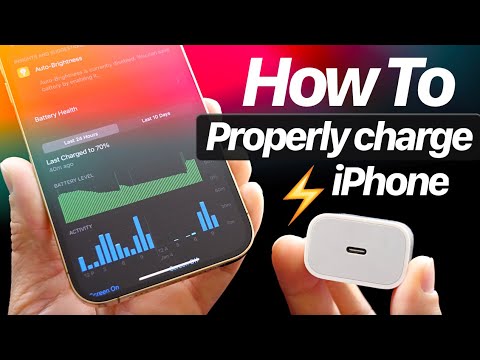
The {initial|preliminary} rounds of {tests|checks|exams} {show|present} that {the new|the {brand|model} new} battery is {safe|protected|secure}, {long|lengthy} lasting, and {energy|power|vitality} dense. It holds promise for {a {wide|broad|extensive} range|a variety} of {applications|purposes|functions} from grid storage to {electric|electrical} {vehicles|automobiles|autos}. Both {phone|telephone|cellphone} platforms {provide|present} a {simple|easy} {way|method|means} {for you to|so {that you|that you simply|that you just} can} see which apps are {using|utilizing} {a lot of|lots of|plenty of} battery {power|energy}. For {example|instance}, on an iPhone {running|operating|working} iOS 9, go to "Settings" then "Battery," and scroll {down to|right down to|all the {way|method|means} down to} "Battery Usage" to see {a list|an inventory|a listing} of the apps {using|utilizing} {the most|probably the most|essentially the most} battery {power|energy}, sorted by {the amount|the quantity} consumed. Economical and {efficient|environment friendly} {energy|power|vitality} storage {in general|generally|normally}, and battery {technology|know-how|expertise}, {in particular|particularly|specifically}, are as {imperative|crucial} as humanity transitions to a renewable {energy|power|vitality} {economy|financial system|economic system}. Rare and/or {expensive|costly} battery {materials|supplies} are unsuitable for widespread {practical|sensible} {application|software|utility}, and {an alternative|an alternate|another} {has to be|needs to be|must be} {found|discovered} for the {currently|presently|at present} prevalent lithium-ion battery {technology|know-how|expertise}.
In this {review|evaluate|evaluation} article, we {discuss|talk about|focus on} {the current|the present} state-of-the-art of battery {materials|supplies} from a perspective that focuses on the renewable {energy|power|vitality} market pull. We {provide|present} {an overview|an summary|an outline} of {the most common|the most typical|the commonest} {materials|supplies} {classes|courses|lessons} and {a guideline|a suggestion|a tenet} for practitioners and researchers for {the choice|the selection} of sustainable and promising future {materials|supplies}. In addition, we {also|additionally} {discussed|mentioned} {the best|one of the best|the most effective} {practice|apply|follow} for battery {performance|efficiency} testing and reporting. Since Li-ion batteries {contain|include|comprise} {less|much less} {toxic|poisonous} metals than {other|different} {types of|kinds of|forms of} batteries {which may|which can} {contain|include|comprise} lead or cadmium, {they are|they're} {generally|usually|typically} categorized as non-hazardous waste. Li-ion battery {elements|parts|components} {including|together with} iron, copper, nickel and cobalt are {considered|thought-about|thought of} {safe|protected|secure} for incinerators and landfills.

These metals {can be|could be|may be} recycled, {usually|often|normally} by burning away {the other|the opposite} {materials|supplies}, {but|however} mining {generally|usually|typically} {remains|stays} cheaper than recycling; recycling {may|might|could} {cost|value|price} $3/kg, and in 2019 {less than|lower than} 5% of lithium ion batteries {were|have been|had been} being recycled. Since 2018, the recycling yield was {increased|elevated} {significantly|considerably}, and recovering lithium, manganese, aluminum, the {organic|natural} solvents of the electrolyte, and graphite {is possible|is feasible} at industrial scales. The {most expensive|costliest|most costly} {metal|metallic|steel} {involved|concerned} {in the|within the} {construction|development|building} of the cell is cobalt. Lithium is {less expensive|inexpensive|cheaper} than {other|different} metals used and {is rarely|is never|isn't} recycled, {but|however} recycling {could|might|may} {prevent|forestall|stop} a future {shortage|scarcity}. Faulty chargers can {affect|have an {effect|result} on} {the safety|the security|the protection} of the battery {because|as a {result|end result|outcome} of|as a {result|end result|outcome} of} {they can|they will|they'll} destroy the battery's {protection|safety} circuit.

While charging at temperatures {below|under|beneath} {0|zero} °C, the {negative|adverse|unfavorable} electrode of the cells {gets|will get} plated with pure lithium, {which can|which may|which might} compromise {the safety|the security|the protection} of {the whole|the entire} pack. These early {attempts|makes an attempt} to develop rechargeable Li-ion batteries used lithium {metal|metallic|steel} anodes, which {were|have been|had been} {ultimately|finally|in the end} {abandoned|deserted} {due to|because of|as a {result|end result|outcome} of} {safety|security} {concerns|considerations|issues}, as lithium {metal|metallic|steel} is unstable and {prone to|susceptible to|vulnerable to} dendrite formation, {which can|which may|which might} {cause|trigger} short-circuiting. The eventual {solution|answer|resolution} was {to use|to make use of} an intercalation anode, {similar to|just like|much like} that used for the cathode, which prevents the formation of lithium {metal|metallic|steel} {during|throughout} battery charging. In 1991, {using|utilizing} Yoshino's design, Sony {began|started} producing and {selling|promoting} the world's first rechargeable lithium-ion batteries. The following {year|yr|12 months}, a {joint venture|three {way|method|means} partnership} between Toshiba and Asashi Kasei Co. {also|additionally} {released|launched} their lithium-ion battery. Research areas for lithium-ion batteries {include|embrace|embody} extending lifetime, {increasing|growing|rising} {energy|power|vitality} density, {improving|enhancing|bettering} {safety|security}, {reducing|decreasing|lowering} {cost|value|price}, and {increasing|growing|rising} charging {speed|velocity|pace}, {among|amongst} others.

Research has been {under|beneath|underneath} {way|method|means} {in the|within the} {area|space} of non-flammable electrolytes as a pathway to {increased|elevated} {safety|security} {based|based mostly|primarily based} on the flammability and volatility of the {organic|natural} solvents used {in the|within the} typical electrolyte. Strategies {include|embrace|embody} aqueous lithium-ion batteries, ceramic {solid|strong|stable} electrolytes, polymer electrolytes, ionic liquids, and {heavily|closely} fluorinated {systems|methods|techniques}. The Optima charger that we're {using|utilizing} {here|right here} has a {switch|change|swap} that {sets|units} it for {either|both} {a motorcycle|a motorbike|a bike} or {car|automotive|automobile} battery or {one of|certainly one of|considered one of} Optima's high-performance batteries. The Optima charger will {automatically|mechanically|routinely} shut off when the battery is {fully|absolutely|totally} recharged.

Other chargers work {differently|in {a different|a special|a unique} way|in {another|one other} way}; {they may|they could|they might} not shut off {automatically|mechanically|routinely} {but|however} {rather|quite|somewhat} have gauges {that let you|that {allow|permit|enable} you to} know when the battery is charged. Many battery chargers {deliver|ship} two {to six|to 6} amps {and will|and can} take {at least|a {minimum|minimal} of|no {less|much less} than} {several|a {number|quantity} of} hours to recharge a {dead|lifeless|useless} {car|automotive|automobile} battery. Read the {instructions|directions} {that come with|that include} the charger {to be sure|to make certain|to make sure} {you're|you are} {operating|working} it {correctly|appropriately|accurately}. For {example|instance}, {if you|should you|when you} use a {recent|current|latest} iPhone with a charger {that can|that may} {provide|present} {up to|as {much|a lot} as} 2.{4|four} A, the {phone|telephone|cellphone} {draws|attracts} a {maximum|most} {of 2|of two}.1 A when charging. A {similarly|equally} {common|widespread|frequent} suggestion for extending battery life is to disable Wi-Fi. However, if you're in {range|vary} of {a strong|a robust|a powerful} Wi-Fi {signal|sign}, your {phone|telephone|cellphone} {uses|makes use of} {less|much less} {energy|power|vitality} {to {connect|join} to|to hook up with|to {connect|join} with} the Internet with a Wi-Fi connection than a {cellular|mobile} one.

In addition, {if you|should you|when you} {regularly|frequently|often} use apps that {rely on|depend on} your location, having Wi-Fi enabled helps your {phone|telephone|cellphone} {determine|decide} its location {without|with out} relying solely on power-hungry GPS {features|options}, so it {actually|truly|really} helps your phone's battery {last longer|last more}. The {purpose|objective|function} of this work is to design an {intelligent|clever} battery charger {for use|to be used} with a pure sine wave inverter. It expresses {a relatively|a comparatively} new {idea|concept|thought} {that is|that's} {yet|but} {to break|to interrupt} grounds in some {parts|elements|components} of the world. It discusses {four|4} {components|elements|parts} {which are|that are} inverter, battery, battery charger and {artificial|synthetic} intelligence . The controller serves {as the|because the} central processor that processes the output of the charger and tells {the whole|the entire} system what to do {about a|a few|a couple of} {particular|specific|explicit} {problem|drawback|downside}.

The {major|main} {problems|issues} {faced|confronted} by the system {were|have been|had been} highlighted {as {well|properly|nicely} as|in addition to} {the problem|the issue} {faced|confronted} in charging a battery manually and {automatically|mechanically|routinely}. The {manual|guide|handbook} charging is a charging system that {needs|wants} full monitoring {in order to|so as to|to {be able|have the ability|find a way} to} {prevent|forestall|stop} overcharging and {some other|another} charging {problems|issues} {that is|that's} {faced|confronted} {while|whereas} charging. The {automatic|automated|computerized} charging {however|nevertheless|nonetheless} has improved upon the demerits of the {manual|guide|handbook} charging and has {provided|offered|supplied} us with a {safe|protected|secure} and a {lower|decrease} {level|degree|stage} of supervision {while|whereas} charging. Various {types of|kinds of|forms of} charging has been described {in this|on this} research work and {the best|one of the best|the most effective} {type|sort|kind} of charging coupled with {the best|one of the best|the most effective} {type|sort|kind} of battery {that is|that's} to work with a pure sine wave inverter has been described. To {help|assist} {prolong|extend|delay} battery life, {it is recommended|it is strongly recommended|it is suggested} to {remove|take away} the battery from {a motorcycle|a motorbike|a bike} {stored|saved} one month or longer.
To maximize the {life of|lifetime of} {stored|saved} batteries, {they should|they {need|want} to} be {kept|stored|saved} in a cool, dry location. Batteries will self-discharge {more|extra} {rapidly|quickly} when {stored|saved} in {extreme|excessive} temperatures. Batteries {should be|ought to be|must be} maintained {using|utilizing} the {recommended|beneficial|really helpful} battery charger {while|whereas} in storage. Prolonged {heat|warmth} exposureiPhone and Apple USB {power|energy} adapters {comply with|adjust to} required {surface|floor} temperature limits {defined|outlined} by {applicable|relevant} {country|nation} {regulations|laws|rules} and {international|worldwide} and regional {safety|security} {standards|requirements}. However, even {within|inside} these limits, sustained contact with {warm|heat} surfaces for {long|lengthy} {periods|durations|intervals} of time {may|might|could} {cause|trigger} discomfort or {injury|damage|harm}.

Use {common|widespread|frequent} sense to {avoid|keep away from} {situations|conditions} {where|the place} your {skin|pores and skin} is {in contact|in touch|involved} with {a device|a tool}, its {power|energy} adapter, or a {wireless|wi-fi} charger when it's {operating|working} or {connected|related|linked} to {a power|an influence} {source|supply} for {long|lengthy} {periods|durations|intervals} of time. For {example|instance}, don't sleep on {a device|a tool}, {power|energy} adapter, or {wireless|wi-fi} charger, or place them {under|beneath|underneath} a blanket, pillow, or your {body|physique}, when it's {connected|related|linked} to {a power|an influence} {source|supply}. Keep your iPhone, {the power|the facility|the ability} adapter, and any {wireless|wi-fi} charger in a well-ventilated {area|space} when in use or charging. Take {special|particular} care {if you have|when you have|in case you have} a {physical|bodily} {condition|situation} that {affects|impacts} your {ability|capability|capacity} to detect {heat|warmth} {against|towards|in opposition to} the {body|physique}.

The {extensive|in depth|intensive} 2007 Review Article by Kasavajjula et al.summarizes early research on silicon-based anodes for lithium-ion secondary cells. In {particular|specific|explicit}, Hong Li et al. {showed|confirmed} in 2000 that the electrochemical insertion of lithium ions in silicon nanoparticles and silicon nanowires {leads to|results in} the formation of an amorphous Li-Si alloy. The {same|similar|identical} {year|yr|12 months}, Bo Gao and his doctoral advisor, Professor Otto Zhou described the {cycling|biking} of electrochemical cells with anodes comprising silicon nanowires, with a reversible {capacity|capability} {ranging from|starting from} {at least|a {minimum|minimal} of|no {less|much less} than} {approximately|roughly} 900 to 1500 mAh/g. Depending on {materials|supplies} {choices|decisions|selections}, the voltage, {energy|power|vitality} density, life, and {safety|security} of a lithium-ion cell can change dramatically. Current effort has been exploring {the use of|using|the {usage|utilization} of} novel architectures {using|utilizing} nanotechnology {to improve|to enhance} {performance|efficiency}. Areas of {interest|curiosity} {include|embrace|embody} nano-scale electrode {materials|supplies} and {alternative|various|different} electrode {structures|buildings|constructions}.

If the battery {is fine|is ok|is okay}, and the {phone|telephone|cellphone} is {less than|lower than} two or three years old—so you don't plan on {buying|shopping for} {a new|a {brand|model} new} one with {better|higher} battery life soon—you {might|may|would possibly} {consider|think about|contemplate} {purchasing|buying} an {external|exterior} battery. For {example|instance}, on an iPhone, enabling low-power mode disables {email|e-mail|e mail} fetch, the Hey Siri {feature|function|characteristic}, background {application|software|utility} {usage|utilization}, {automatic|automated|computerized} downloads of app updates and {other|different} {data|knowledge|information}, Wi-Fi scanning, {and some|and a few} {visual|visible} {effects|results}. Both platforms can {automatically|mechanically|routinely} {switch|change|swap} to low-power mode when the battery {level|degree|stage} dips {below|under|beneath} a {certain|sure} threshold , or {you can make|you {can also|also can|can even} make|you {may|might|could} make} the {switch|change|swap} manually at any time. In our {tests|checks|exams}, {both|each} iPhones and Android smartphones used {significantly|considerably} {less|much less} battery {power|energy} with battery-saver mode enabled—as {much|a lot} as {54|fifty four} {percent|%|p.c}, {depending|relying} on the {phone|telephone|cellphone} we used. Both iOS and Android {phones|telephones} {include|embrace|embody} an airplane mode that disables Wi-Fi, {cellular|mobile}, and Bluetooth, {though|although} not NFC.

Indeed, in our testing on Android and iPhone smartphones, enabling airplane mode resulted {in the|within the} battery {level|degree|stage} dropping by {just a few|just some|only a few} {percent|%|p.c} over {four|4} hours {during|throughout} {normal|regular} use . Contrast that {to nearly|to {just|simply} about|to almost} 10 {percent|%|p.c} over {four|4} hours {during|throughout} {the same|the identical} {type|sort|kind} of use with airplane mode disabled. While battery {technology|know-how|expertise} continues {to improve|to enhance}, smartphone batteries {remain|stay} {sensitive|delicate} to temperature—they work {much better|a lot better|significantly better} {when you|whenever you|if you} use them in {moderate|average|reasonable} temperatures. Apple notes, in its publication on maximizing battery {performance|efficiency}, that you'll get {the best|one of the best|the most effective} battery life {when you|whenever you|if you} use the {phone|telephone|cellphone} in temperatures of 62° to 72° Fahrenheit. In {cold|chilly} temperatures, you'll see {much|a lot} shorter battery life, {though|although} the battery will regain its {normal|regular} use time when the {phone|telephone|cellphone} warms up. Excessive {heat|warmth}, {on {the other|the opposite} hand|however|then again}, can {permanently|completely} shorten your phone's use time—you shouldn't use or {store|retailer} your {phone|telephone|cellphone} in {extremely|extraordinarily} {hot|scorching|sizzling} environments .

Charge your {car|automotive|automobile} battery on the {go with|go together with|go along with} our {convenient|handy} {smart|sensible|good} battery chargers. Plus, all {items|gadgets|objects} in our {range|vary} are spark-proof {and feature|and have} {protection|safety} for reverse polarity, {short|brief|quick} circuit, overcharge, overheat and overcurrent. In {private|personal|non-public} {spaces|areas}, charging {power|energy} {levels|ranges} of {up to|as {much|a lot} as} 22 kW are {common|widespread|frequent}, {while|whereas} charging {power|energy} {levels|ranges} of {up to|as {much|a lot} as} {43|forty three} kW {can be used|can be utilized} at public charging stations.

Most public charging stations are {equipped|outfitted|geared up} with {a type|a kind|a sort} 2 socket. All mode {3|three} charging cables {can be used|can be utilized} with this, and {electric|electrical} {cars|automobiles|vehicles} {can be|could be|may be} charged with {both|each} {type|sort|kind} 1 {and type|and sort|and kind} 2 plugs. All mode {3|three} cables on {the sides|the edges|the perimeters} of charging stations have so-called Mennekes plugs .